THE FILM / A CLOSER LOOK

ABOUT THE FILM.

The story behind Savage Youth—and a closer look at youth, belonging, social pressure and the risks of digital life.

01 / OVERVIEW

An American tragedy told through its young characters.

Savage Youth is a 2018 American independent crime drama written and directed by Michael Curtis Johnson. Set in a racially divided small town, it follows young people negotiating romance, ambition, insecurity and belonging as their choices begin to intersect.

The film introduces Elena and Jason, whose relationship is complicated by uncertainty and mistrust. Jason channels his aspirations into rap music while Gabe searches for an opening in a town where opportunity feels unevenly distributed. Elena's emerging friendship with Gabe alters the balance among them. What begins as everyday intimacy and frustration builds toward a violent collision.

Rather than presenting the characters as simple heroes or villains, the film asks viewers to sit with their contradictions. Tender moments coexist with volatility. Music and ordinary hangouts become part of the same world as jealousy, drugs and mounting resentment. The result is a coming-of-age narrative that refuses the comforts usually associated with the genre.

A close-up of a young woman with pink hair from the Savage Youth trailer
Still from the trailer · A personal story inside a broader social drama

Inspired by reality, not a documentary.

Johnson has explained that the project grew from a real crime in his hometown of Joliet, Illinois. He attended court proceedings and funerals while researching the events, but his goal was not a beat-for-beat reconstruction. In a 2018 interview, he described the film as a melodrama rather than a docudrama, emphasizing empathy and the lives surrounding a tragedy instead of reducing anyone to a single moment.

That distinction matters. The film takes its emotional and social context from real life while developing fictionalized characters and scenes. Viewers should approach it as a dramatic interpretation, not a historical record or an account of every person involved in the underlying case.

The Midwestern setting carries a strong sense of place. Residential streets, cars, bedrooms and gathering spots become the backdrop for choices whose consequences extend beyond one relationship. The specificity makes the story intimate; the larger questions about alienation and social division make it recognizable far beyond its setting.

What the film explores.

Race and class. The characters live in a community shaped by racial division and economic pressure. The film places those forces in the background of everyday interactions without treating any single character as a stand-in for an entire social group.

Music and identity. Jason's interest in hip-hop offers an outlet for self-invention and a way to project confidence. The soundtrack and performance sequences underscore a gap between the personas people create and their vulnerabilities.

Intimacy and consequences. Relationships in Savage Youth are neither idealized nor easily categorized. The story's momentum comes from misunderstandings, fragile trust and the effects of actions that grow beyond their original intentions.
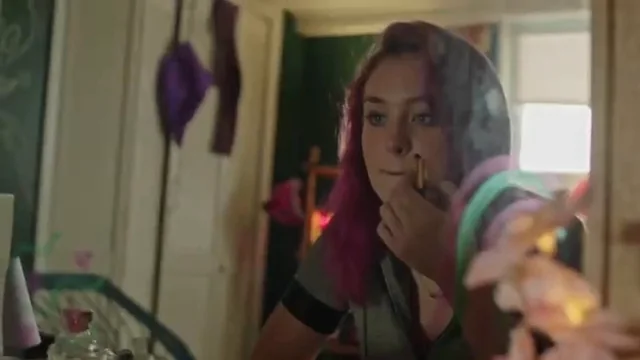
A character looks into a mirror in a room filled with personal belongings
Still from the trailer · Identity and self-image are recurring concerns

From the set to the screen.

Filmed in and around Joliet, Savage Youth had its world premiere at the 2018 Slamdance Film Festival. Its cast includes Grace Victoria Cox, Tequan Richmond, Will Brittain and Chloë Levine, along with Sasha Feldman, Mitchell Edwards, J. Michael Trautmann and Tomas Pais. The production was led by writer-director Johnson with producers Charlene Lee and Michael Peluso.

The film runs approximately 100 minutes. After its festival debut in 2018, it reached digital audiences in 2019. Its disturbing subject matter makes it best suited to viewers prepared for a serious crime drama rather than a light-hearted teen movie.

Further reading and verification

Explore the original Slamdance premiere announcement, the director interview, and the IMDb film record.
02 / THE PRESSURES IN THE STORY

Growing up
without easy answers.

The film is about specific people, not a universal portrait of a generation. Yet the pressures around them make its choices and consequences feel painfully familiar.

COMING OF AGE / SOCIAL REALITY

When belonging feels like survival.

Savage Youth places friendship, romance and ambition inside a community marked by division. Its young characters are searching for control over their futures, often without the language or support to make sense of their fears. The film is most unsettling when ordinary uncertainty begins to harden into harmful decisions.

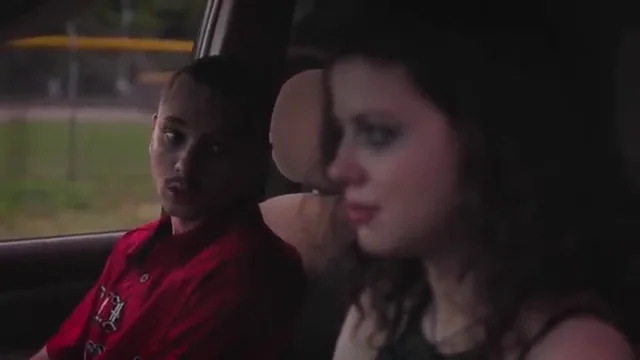
Two young people inside a car, seen in a scene from the Savage Youth trailer
Trailer still · Relationships and belonging are central to the drama
01 / OPPORTUNITY

Economic pressure and unequal chances.

Money, race and local expectations shape how the characters understand what is possible. The film shows the frustration of trying to build an identity in a place where some paths feel closed off before adulthood has properly begun. Its social setting adds complexity without excusing the harm people cause.

02 / CONNECTION

Jealousy, trust and peer influence.

Wanting acceptance can make a small disagreement feel enormous. Shifting relationships create jealousy, suspicion and pressure to perform confidence for others. The film asks how quickly young people can lose sight of their own judgment when pride and fear of rejection begin to dictate their actions.

03 / ESCALATION

Substance use, anger and violence.

Drugs and volatile confrontations form part of the story's darker environment. Rather than treating violence as spectacle, the drama traces how impulsive decisions and unresolved resentment can accumulate. Its tragedy lies in the distance between the future the characters imagine and the damage they ultimately cannot undo.

03 / A CONTEMPORARY PARALLEL

Youth gambling in
the smartphone era.

The pressures around risk, belonging and the search for an escape do not end with the film's closing credits. Today, some of those pressures also play out through phones and online platforms.

01 / EXPOSURE

Gambling moves into the everyday feed.

For many teenagers, gambling is no longer encountered only through a physical venue. Advertising, sports-related content, influencer posts and gambling-like mechanics can appear alongside ordinary entertainment. Repeated exposure can make betting seem like an unremarkable part of digital life, even before someone has placed a wager.

The UK's 2025 Young People and Gambling survey found that 30% of respondents aged 11–17 had spent their own money on some form of gambling during the previous year, up from 27% in 2024. This includes activities such as arcade machines and private bets: it is not a measure of teenage online-casino participation. The same survey found that 8% reported gambling online in the past year.

02 / ALWAYS ON

A casino can now fit in a pocket.

A smartphone changes the setting in which risk is encountered. A person no longer needs to travel to a gambling venue to see promotions or, where permitted by law, access gambling products. Apps and mobile sites can be available at almost any hour, making the distance between a moment of curiosity and an opportunity to wager much shorter.

The World Health Organization warns that the easy availability of high-intensity online gambling products increases risks, especially when gambling is normalized through media and advertising. Constant access can also make it harder for someone already struggling to step away, particularly when play begins to interfere with sleep, school, work or relationships.

03 / LESS FRICTION

Faster sign-up does not mean safer access.

Digital accounts can feel effortless. Social sign-in options, saved profile information, autofill, electronic identity services and external payment systems may reduce the steps a person sees during registration. When a casino or betting site resembles a familiar app, the process can appear less serious than opening an account for a financial-risk activity.

That convenience must not be confused with permission to gamble. In regulated markets, operators are required to apply age and identity checks. For example, the UK Gambling Commission requires age and identity verification before online gambling is allowed. Third-party services may help verify identity, but a social account or a quick sign-in should never substitute for the legal safeguards that protect minors.

04 / THE HUMAN COST

When entertainment becomes compulsion.

Gambling-related harm is not simply a question of how often a person plays. Warning signs can include hiding losses, repeatedly trying to win money back, borrowing to keep playing or neglecting everyday responsibilities. Financial distress can compound feelings of isolation and shame, making it harder to ask for help.

Prevention begins with honest conversations, meaningful age safeguards, limits on exposure to gambling promotion and accessible support. The WHO identifies impaired control, growing priority given to gambling and continuing despite harmful consequences as features of gambling disorder. Concerned young people and families should seek support from a qualified local health or gambling-harm service rather than wait for a crisis.

RESEARCH SNAPSHOT / GREAT BRITAIN, 2025

Where young people notice gambling ads.

In a survey of 3,666 people aged 11–17, these shares reported seeing gambling advertising at least weekly through the indicated digital channels. These are advertising exposure rates, not rates of gambling addiction or online-casino use.

Source: UK Gambling Commission, Young People and Gambling 2025.

The connection to Savage Youth is thematic, not literal: vulnerable decisions can have lasting consequences, and young people deserve stronger support before a moment of pressure becomes a much larger problem.

04 / KEY MILESTONES

A short
film timeline.

A concise view of the film's documented path from production to its wider audience.

  1. 2016

    Production

    The film was in production in the Chicago and Joliet area.

  2. 2018

    Slamdance premiere

    The film had its world premiere at the 2018 Slamdance Film Festival.

  3. 2019

    Digital release

    The film became available to streaming and rental audiences, with regional differences.

NEXT / THE PEOPLE

Meet the ensemble
behind the story.

Explore the cast